

Translating Clinical Rehabilitation Into a Home-Based Connected Treatment Experience
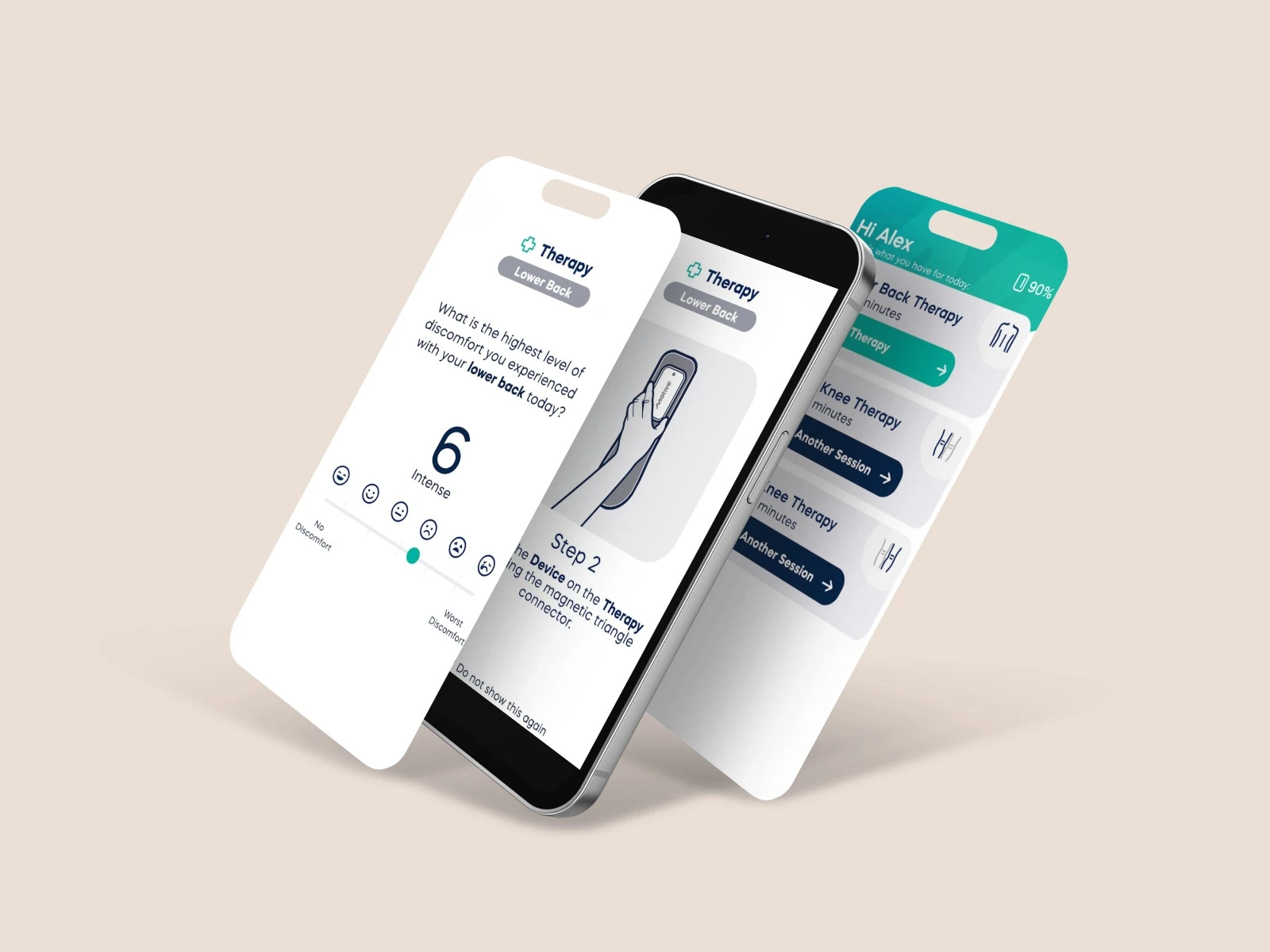
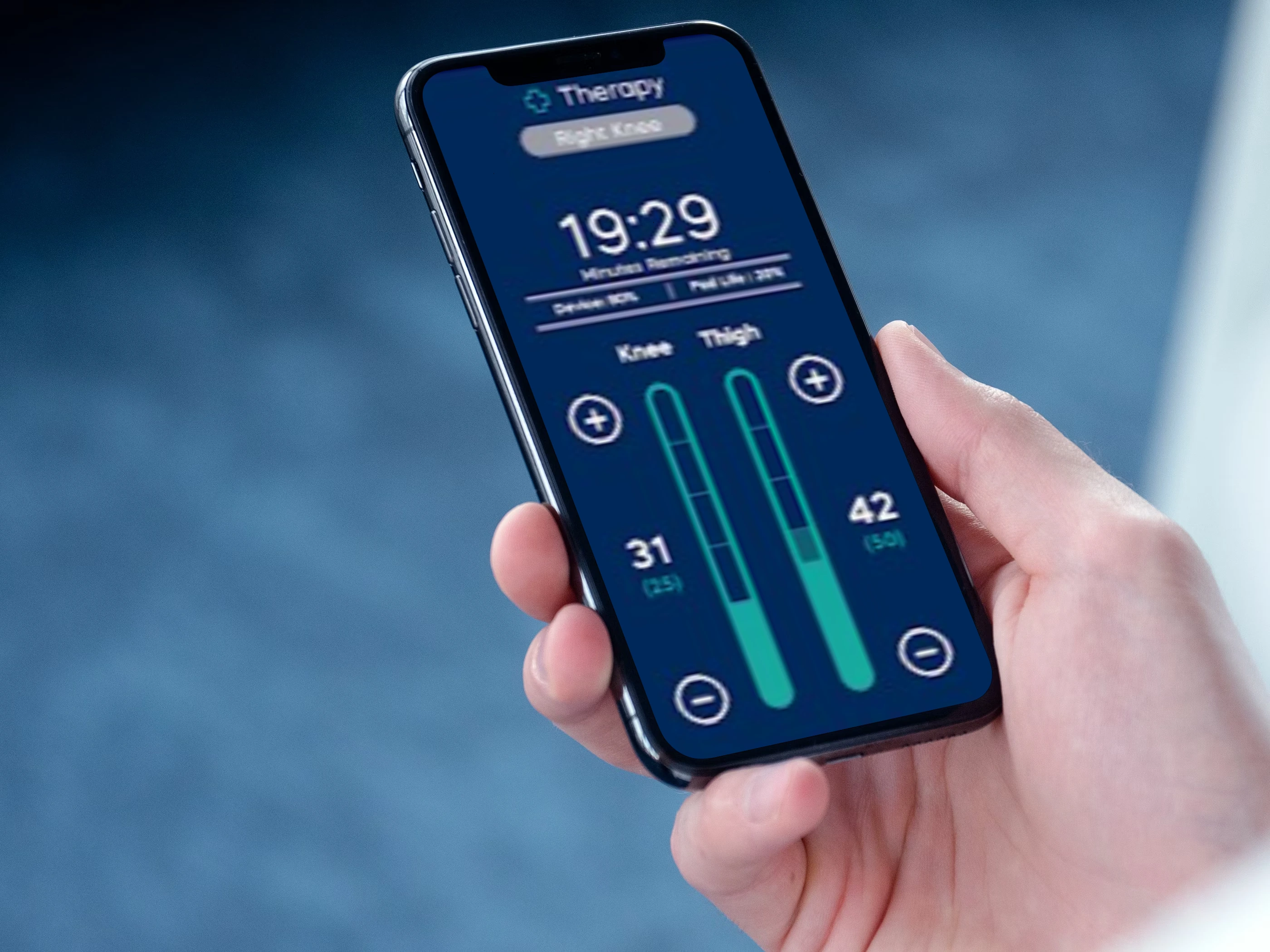
The client was developing a therapy solution aimed at individuals undergoing musculoskeletal rehabilitation, particularly those requiring structured muscle stimulation programs. Traditionally, such treatments are delivered in supervised clinical environments, where therapy intensity, duration, and consistency are managed by trained professionals. However, maintaining frequent clinic visits is often impractical for patients dealing with mobility limitations, long recovery periods, or geographic constraints. The project involved building a connected system where a therapy device could be controlled and monitored through a mobile application. The intention was not to replace clinical care but to extend it beyond physical settings, allowing patients to continue prescribed treatment routines independently. ePhoenix was responsible for engineering the mobile application layer and enabling stable communication between the therapy hardware and digital interface. This required aligning device behaviour, clinical treatment logic, and user interaction design into a coherent system that patients could operate without technical assistance. The resulting platform functions as a digital therapy companion, guiding users through structured treatment sessions while maintaining consistency with clinical protocols.
Phased product development with continuous hardware-software integration cycles
Healthcare

ePhoenix helped us translate complex therapy workflows into a digital system that patients can confidently use at home. Their ability to align device behaviour with real-world treatment needs was critical to the success of this platform.


Clinical Product Lead
The work began by understanding how therapy sessions are structured in real clinical contexts. These sessions were then broken down into discrete digital steps that could be sequenced logically within the application.
Device communication layers were engineered to prioritise reliability over feature complexity. Special attention was given to how pairing, calibration, and session control interactions behaved in real-world usage scenarios.
User interaction design focused on reassurance rather than efficiency alone. Visual and behavioural cues were implemented to help patients understand therapy progression without requiring medical interpretation.
Continuous collaboration with device engineers ensured that therapy parameters remained synchronised between firmware logic and application workflows.
Great! We're excited to hear from you and let's start something special together. call us for any inquiry.
Hear directly from the teams who shipped with ePhoenix.
Doolen needed a robust learning platform that could handle thousands of concurrent learners. ePhoenix delivered exactly that - on time, within budget, and beautifully made.

Founder & CEO of Doolen Strategic Partners
ePhoenix played a pivotal role in helping us transform our vision into a scalable digital healthcare platform. Their technical expertise and collaborative approach enabled us to deliver reliable telemedicine services when our communities needed them most.

Chief Executive Officer of MDLink
ePhoenix did not just build software - they rebuilt our entire thinking around product development. What we thought would take 6 months, they delivered in 10 weeks with zero rework. The platform migration they executed later was just as seamless - zero downtime and perfect team onboarding.

Founder & CEO of Bhimani Exports
Our shipment tracking and logistics dashboard is now real-time. Execution was brilliant - what used to take hours of manual coordination now happens automatically. Working with ePhoenix truly felt like having an in-house team that never went home; they were in our Slack and standups every day.

Founder & CEO of Poisedon Overseas LLP
We had tried three other agencies before ePhoenix. The difference? They communicate like engineers, not salespeople. Every sprint had real outcomes.

Head of Engineering of Element Engineering
Our automation suite eliminated 80% of manual QA effort within the first deployment cycle. The team writes code that actually scales.

Technology Lead of HRF Incubation Centre
ePhoenix built a dealer management portal that transformed how our dealerships track parts, inventory and service orders. Accuracy went up by 60% in the first month.

CEO of P.B. Tractors Pvt. Ltd.
From association apps for member management to niche marketplace platforms and real-time bullion rate tracking, ePhoenix has nailed the speed, reliability, and UX for all our ventures. Our users trust these products for their daily business, and the results have been flawless.

Secretary General & Founder of The Bullion Jewellers

B-704, Titanium Heights, Corporate Rd, opp. Vodafone House, Prahlad Nagar, Ahmedabad, Gujarat 380015

